On building something that mattered, and what it really cost.
ByVanessa Radley
Filed underFounder · Brand · Sustainability
Reading time~ 8 minutes
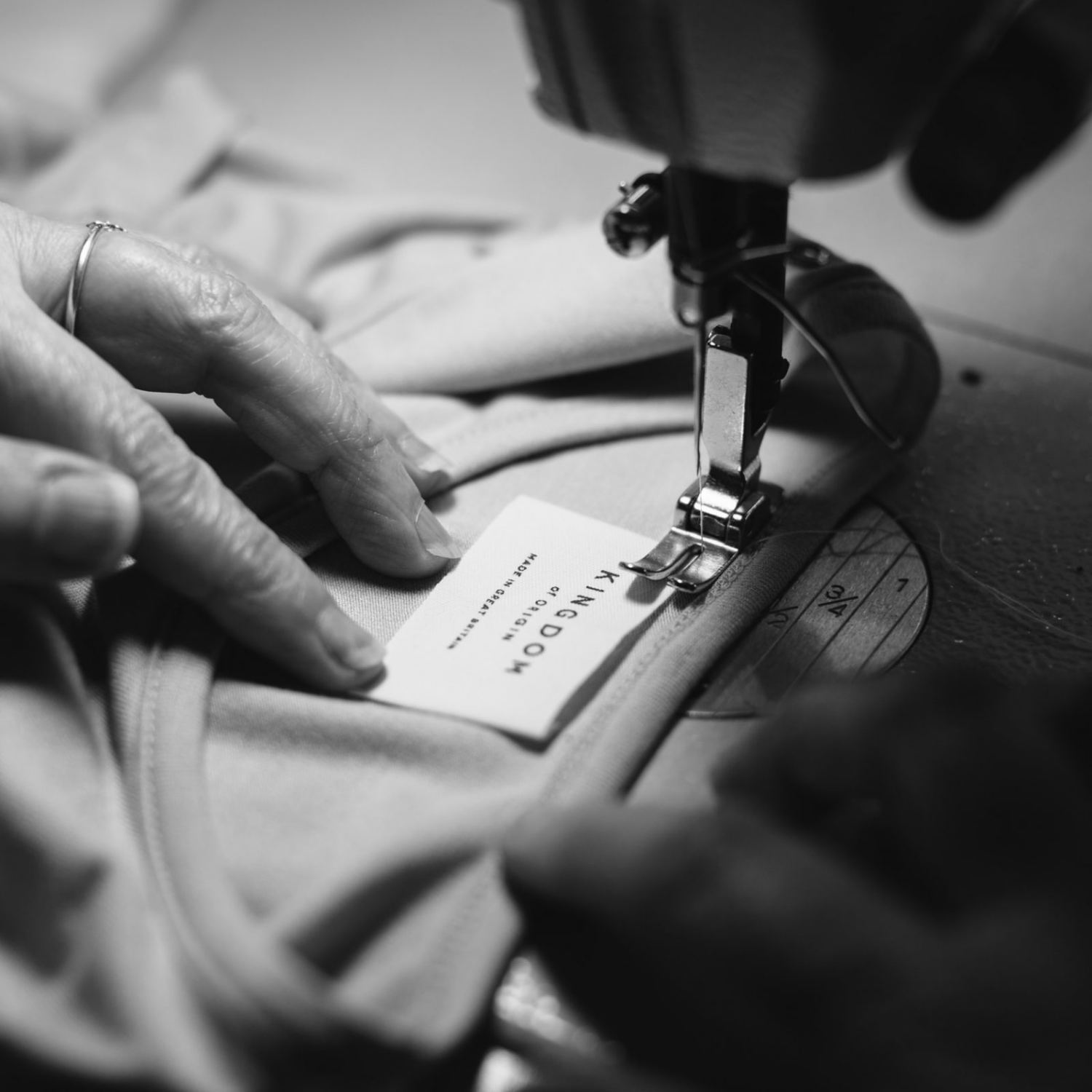
Sewing labels, 2016.
It started with a book, a workshop, and a decade of quiet frustration finally finding its shape.
I was at The School of Life in London, listening to JP Flintoff talk about consequential action: the idea that each of us has more capacity to change things than we allow ourselves to believe. I'd spent years working with British fashion and lifestyle brands. Good brands, thoughtful people, beautiful products. And something had been accumulating in me, slowly and then all at once, about the gap between what those brands said and what they actually did.
Sourcing abroad is not inherently wrong. The fashion industry runs on global supply chains and always has. What troubled me was the silence around it: brands that presented an image of craft, provenance, and care, while saying very little about where anything was actually made or by whom. Not lying exactly. But not telling the whole truth either. In an industry built on storytelling, the most consequential story — the one about the people and the places behind the product — was the one most consistently left untold.
I also had a more personal reason. A closer-to-home one.
I'd grown up connected to Leicester, once the thriving heart of the British rag trade, a city whose manufacturing heritage had been hollowing out for decades. The mills, the factories, the seamstresses, the pattern cutters — a whole ecosystem of extraordinary skill, quietly disappearing. I wanted to do something that put work back into those hands. I believed, with the particular conviction of someone who hasn't yet learned to be afraid of the thing they're attempting, that if you tried hard enough to do something genuinely good — for your community, for the craftspeople behind the product — the goodwill would find its way back. That the industry would lean in. That people would want to support something worth supporting.
The factory owners and mill operators had businesses to run. My conviction meant nothing to their margins. They understood the hard economics of what I was attempting far better than I did. They knew what I was yet to discover.
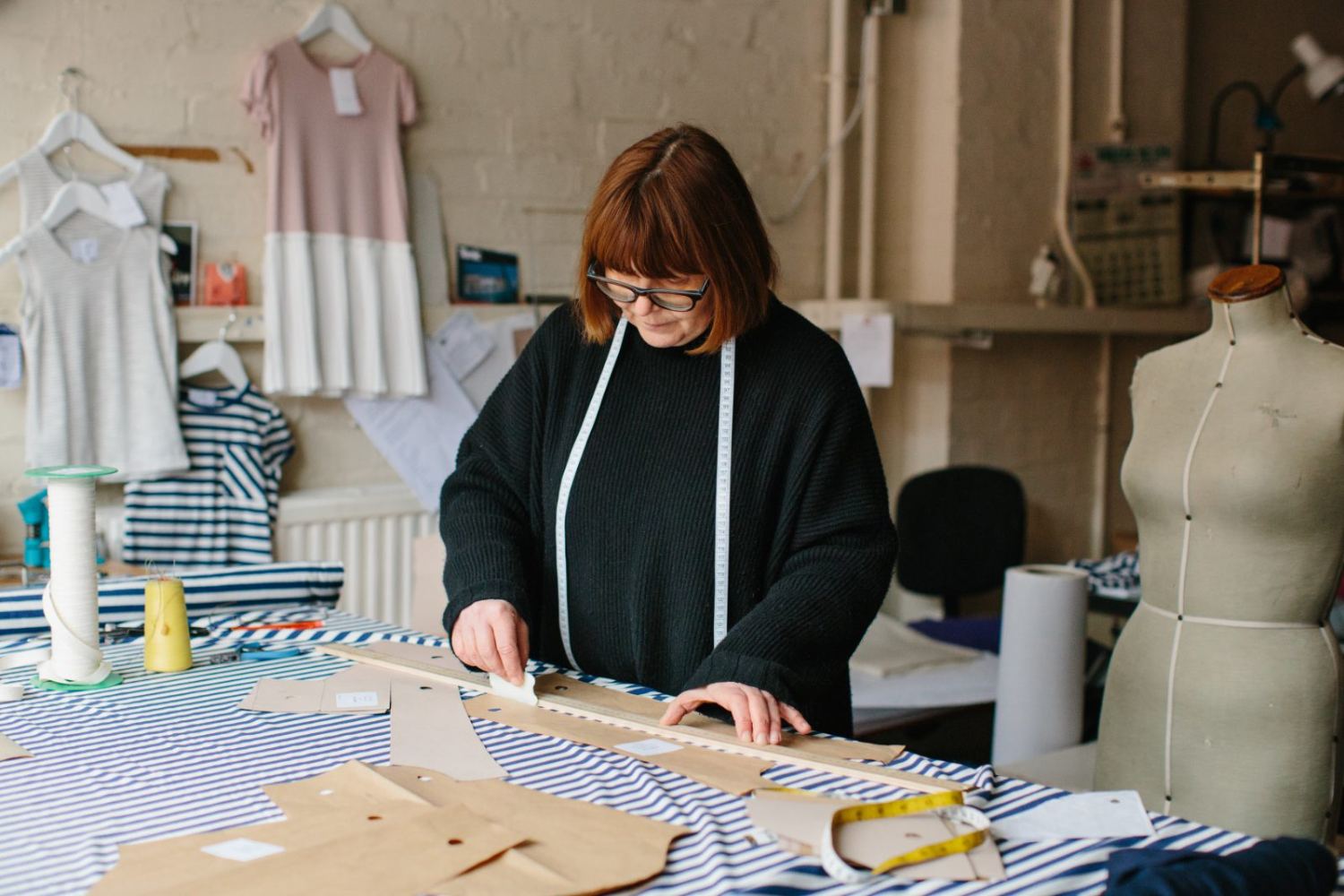
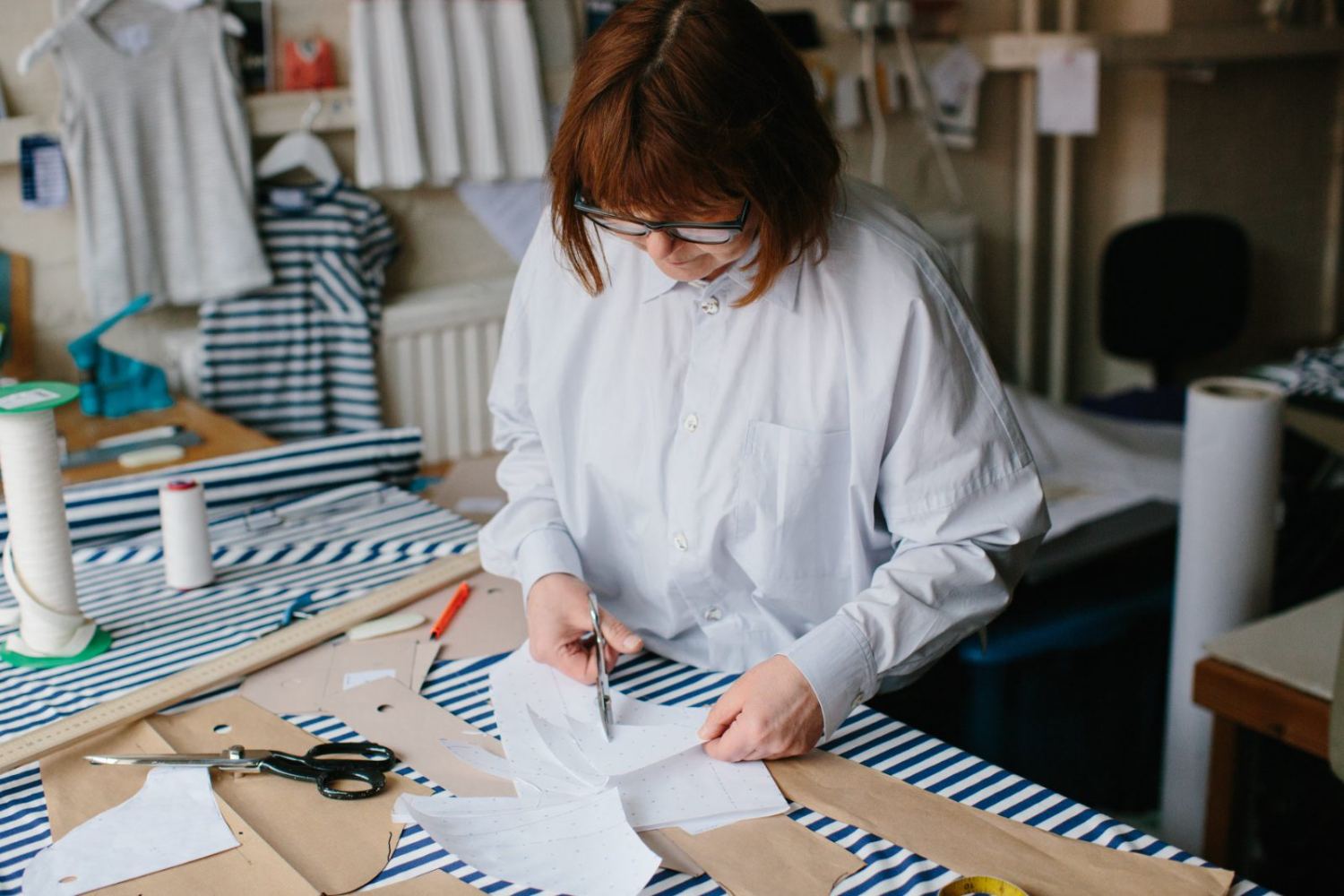
Master pattern cutter, Sveta, 2016.
Kingdom of Origin launched in 2015 with a proposition that was, at the time, genuinely rare. Every fabric sourced from British mills. Every garment cut and stitched in a small ethical factory in Leicester — by a master pattern cutter whose work was extraordinary, and a team of seamstresses whose skill put most of what I'd seen in fashion to shame. Jersey from a family business that had been making it for longer than I'd been alive. Labels, packaging, trims — made as locally as we could manage, with as little distance as possible between the hand that made it and the child who would wear it.
We designed for longevity, which in childrenswear felt almost revolutionary. Adjustable cuffs. Adjustable waistbands. French seams. Fabrics chosen not for their price point but for how they would feel against skin and how long they would last. Garments that were made to last and be passed along through generations. The opposite, in almost every respect, of how the industry around us operated — and precisely the point.
I believed in it completely. That belief was the best thing about the whole endeavour. Later, it would also be the thing that nearly undid me. But we'll get to that.
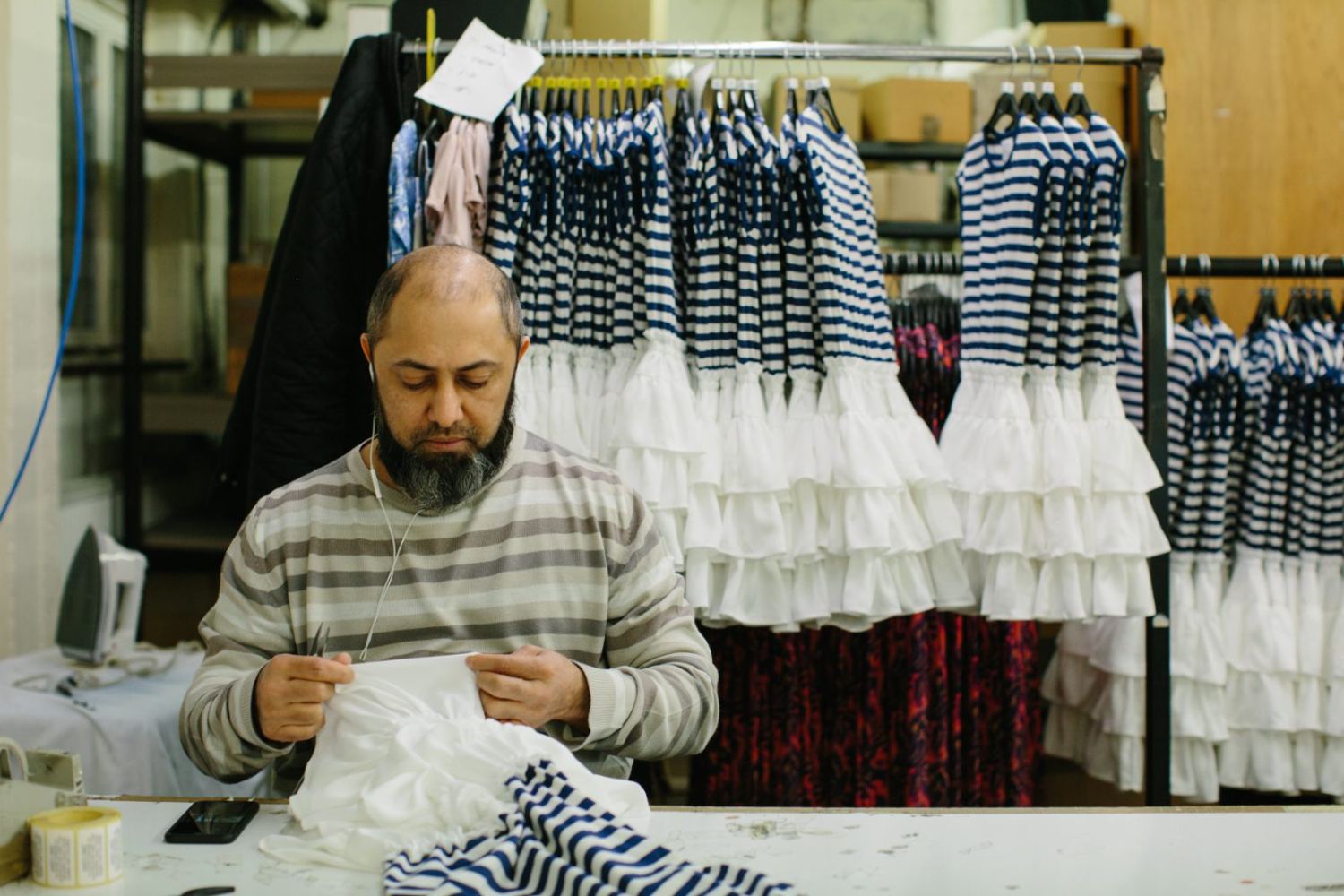
Abdul, garment finishing, Leicester, 2016.
The world, to its credit, noticed. Kingdom of Origin made the front cover of Drapers in February 2018. For a brand that had existed for less than three years, built entirely in Leicester, it was the kind of validation that makes you feel, briefly, invincible. Vogue followed. Harper's Bazaar. Best Childrenswear Brand from Smallish Magazine. Best Fashion Newcomer from the Junior Design Awards. We showed our SS18 collection at Pitti Bimbo in Florence — walking into that trade show with something made entirely in Leicester, by people I knew by name, felt like a small act of defiance that I am still quietly proud of.
The following year, SS19 at Playtime Paris. And in Paris, the right people found us.
Buyers from Neiman Marcus. Bergdorf Goodman. Fenwicks. South Korea. Zurich. They came to the stand, handled the garments, and understood immediately what we had made and why. Orders were placed. Real ones, from serious retailers. The thing I had set out to prove — that British-made, sustainably sourced, beautifully designed childrenswear could compete at the highest level — had been proven.
I stood in that Parisian showroom and felt something I can only describe as the particular joy of being right about something that everyone quietly assumed you were wrong about.
And then I sat down with the terms.
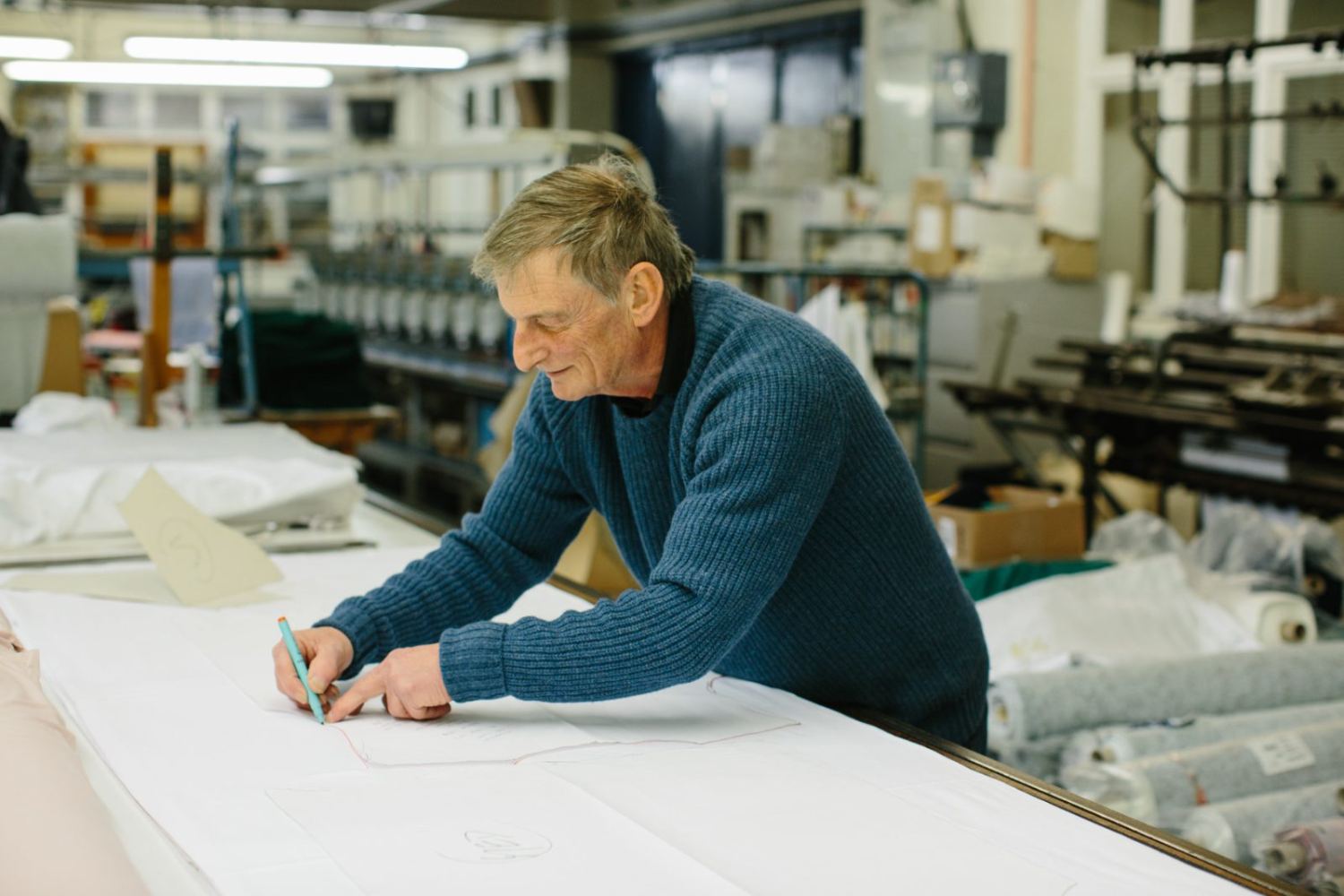
Factory owner, Phil, Leicester, 2016.
The economics of wholesale at the level of Neiman Marcus and Bergdorf Goodman are designed for businesses with deep financial roots. The payment terms, the margin expectations, the deposit structures required to fulfil forward orders at volume — none of it is designed for a founder running a business on conviction and carefully managed resources. To meet those orders, I would have needed to invest at a scale that was simply beyond my reach. The gap between what they were offering and what it would cost to deliver was not a gap I could bridge.
I made the decision to cease production.
It was the right decision. It was also the hardest decision I had made in my professional life. And for a long time, it was difficult to hold both of those things at once. To know something was right and still feel the full weight of what it cost.
What followed was quieter. Mentoring small brands. Consulting. Slowly working out what the experience had actually given me, beneath the parts that had hurt. It took longer than I expected to see it clearly. But when I did, it was unambiguous.
A compelling brand narrative is not a business model. The two must be built together from the beginning, or they will eventually pull against each other, and the narrative always loses that fight, no matter how good it is. Kingdom of Origin had a story that resonated immediately and deeply with exactly the right people, in exactly the right rooms. What it didn't have was a commercial structure robust enough to carry the weight of its own ambition.
The brands that endure are the ones where the founding belief and the financial architecture are designed in relation to each other, where values shape not just the product and the story, but the pricing, the channel strategy, the pace of growth, and the discipline to know what to say no to. Even when saying no feels like betraying the whole point.
I was not wrong about what Kingdom of Origin was trying to do. The world has caught up considerably since 2015. Provenance matters now in ways it simply didn't then. British manufacturing is having a moment. The conversation about greenwashing that I was quietly furious about in 2015 is now a mainstream reckoning. The conviction was sound. What I hadn't yet built was a commercial architecture robust enough to carry it.
Every brief that comes to Radley Creative is shaped by that experience. Not as a cautionary tale. I am genuinely not interested in cautionary tales. But as a form of understanding that I don't believe you can acquire any other way.
When I work with founders, I am thinking about more than how the brand looks or what it says. I am thinking about whether the story can carry the commercial weight about to be placed on it. Whether the values are embedded deeply enough to survive the decisions that growth will force. Whether the founding belief is clear enough to be useful when things get difficult — and things always get difficult.
The most important thing Kingdom of Origin taught me is that the brands worth building are always harder than they look. They require more honesty, more patience, and more financial rigour than the excitement of a good idea tends to make you plan for.
That is not a reason not to build them. The world needs people who build them.
It is simply a reason to build them with your eyes completely open.
And to find someone in your corner who has already learned the cost of keeping them closed.
Master pattern cutter, Sveta, Leicester, 2016.
Vanessa Radley is the founder of Radley Creative. Kingdom of Origin traded from 2015 to 2020.